
Arcfra AECP 6.3 Tech Insights: Does Its Real-World Performance Deliver?
With technical advancements across four key dimensions — system kernel, hardware acceleration, storage-network aggregation, and storage scalability — Arcfra AECP 6.3 delivers a landmark 4.6X performance increase that matches tier-1 all-flash arrays.
In real-world testing, AECP 6.3 achieved over 11 million IOPS and 130 GiB/s bandwidth on Intel-based servers, with average latency below 100 μs, fully meeting the demands of high-performance workloads such as low-latency financial trading, mission-critical databases, and AI applications.
Test Environment
The test environment was built on three-node physical servers running AECP 6.3 (ACOS 6.3 software). Each node was configured as follows:
- CPU: Intel Xeon Gold 6442Y
- Memory: 512 GB
- Storage: 8 × Intel 3.2TB NVMe SSD (all-flash)
- Network: Mellanox ConnectX-7
During testing, AECP’s Boost mode and RDMA high-speed networking capabilities were fully enabled. A 3P6V model (3 nodes, 6 virtual machines) was used to simulate high-concurrency workloads.
Test Results
4K Random Read/Write
4K random read/write is a key metric for evaluating hyperconvergence infrastructure (HCI) storage performance and its ability to support high-concurrency workloads of mission-critical databases (such as MySQL and Oracle Database).
Under a concurrency level and queue depth of (1*1), the performance results are as follows:
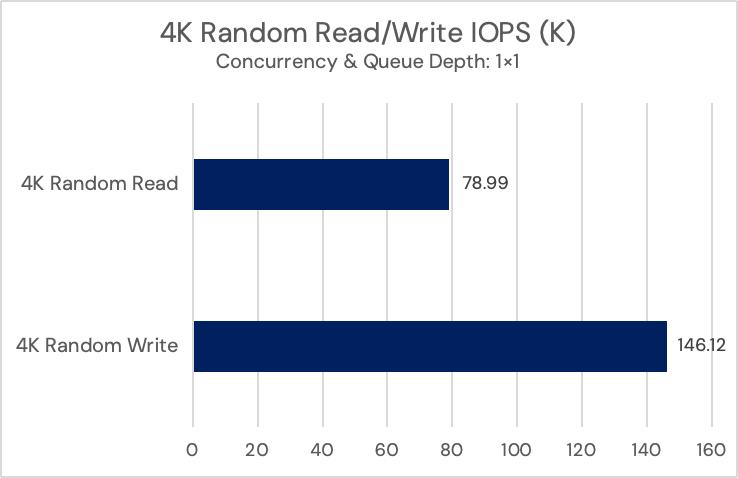
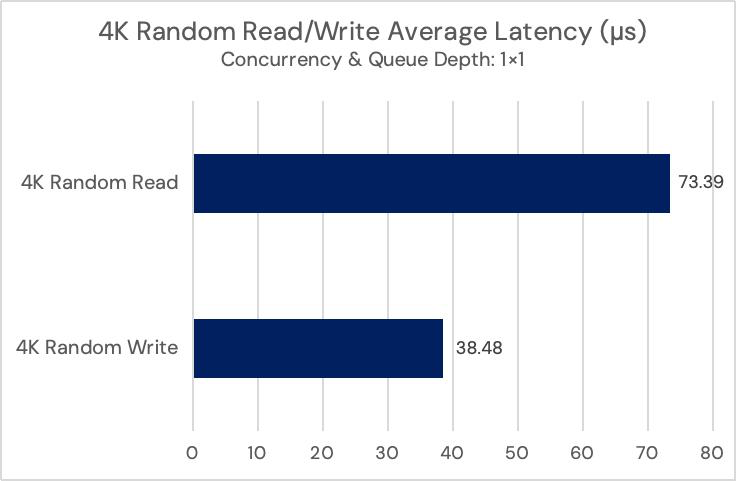
Under a concurrency level and queue depth of (8*64), the performance results are as follows:
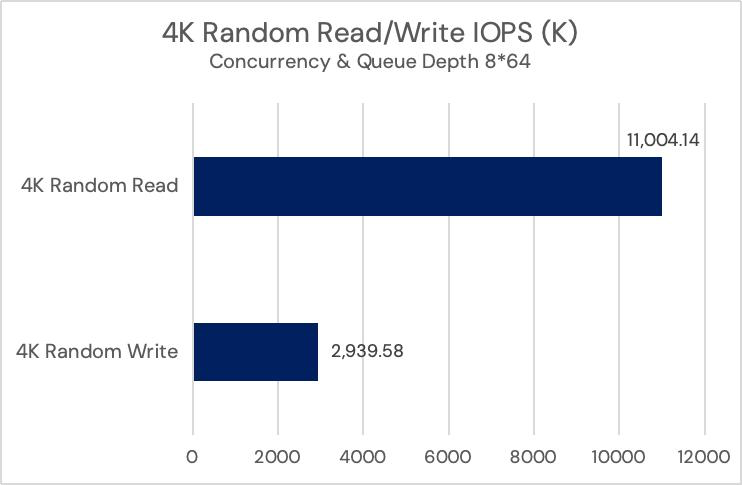
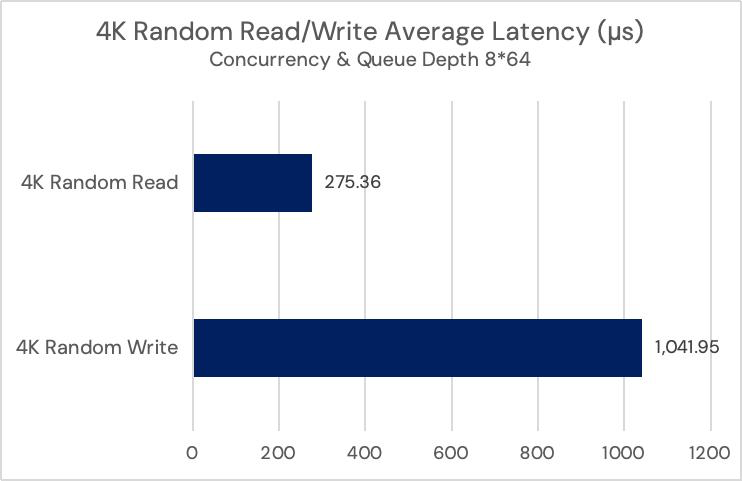
It can be observed that under a high-concurrency 4K random read scenario (8×64), AECP 6.3 delivers exceptional performance exceeding 11 million IOPS. Under the optimal (1×1) condition, it achieves an ultra-low average latency of below 100 μs, fully meeting the high-concurrency, low-latency requirements of mission-critical systems in industries such as finance and manufacturing.
256K Sequential Read/Write Performance
256K sequential read/write is a key metric for evaluating the bandwidth capability of HCI storage systems and their ability to support high-throughput workloads such as big data analytics and backup & recovery.
Under a concurrency and queue depth of (1*1), the performance results are as follows:
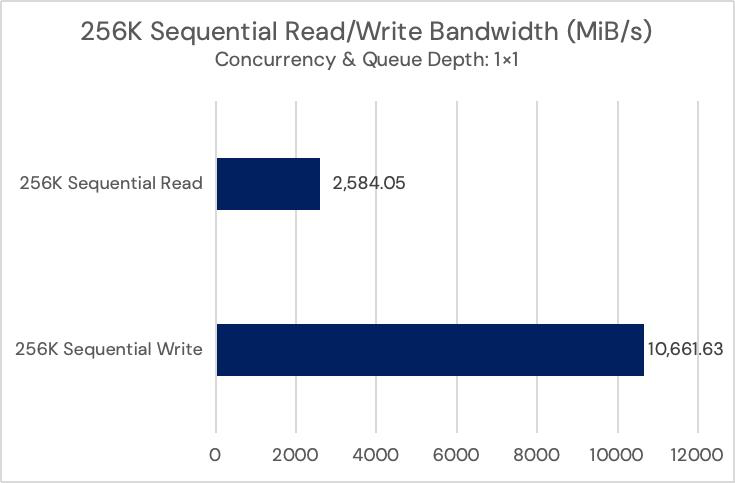
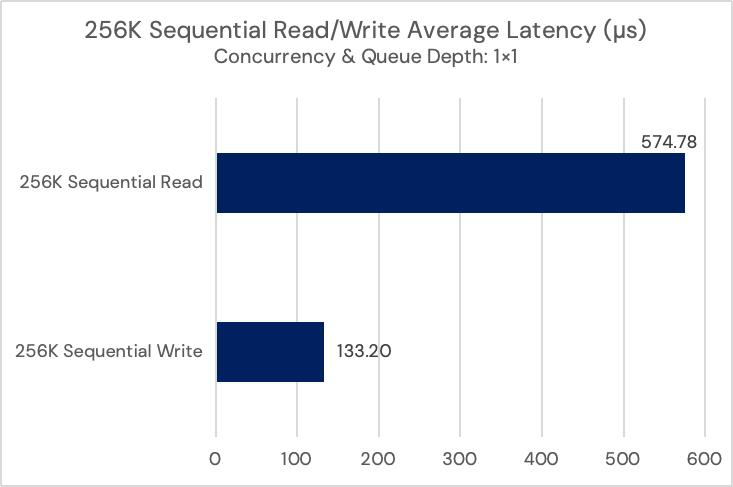
Under a concurrency and queue depth of (8*32), the performance results are as follows:
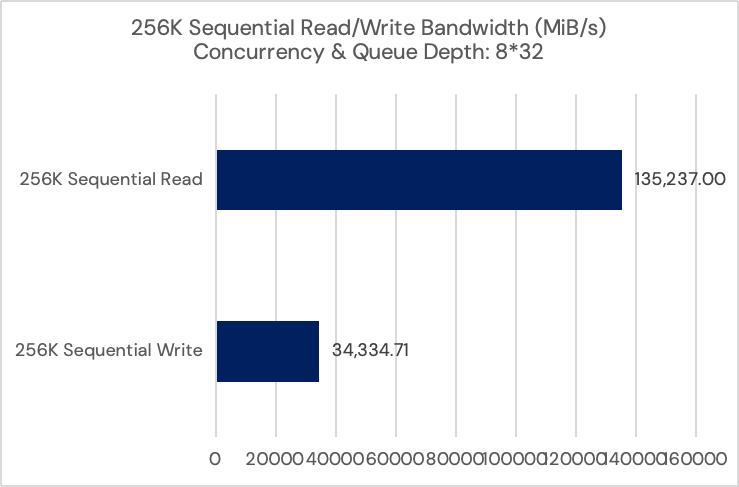
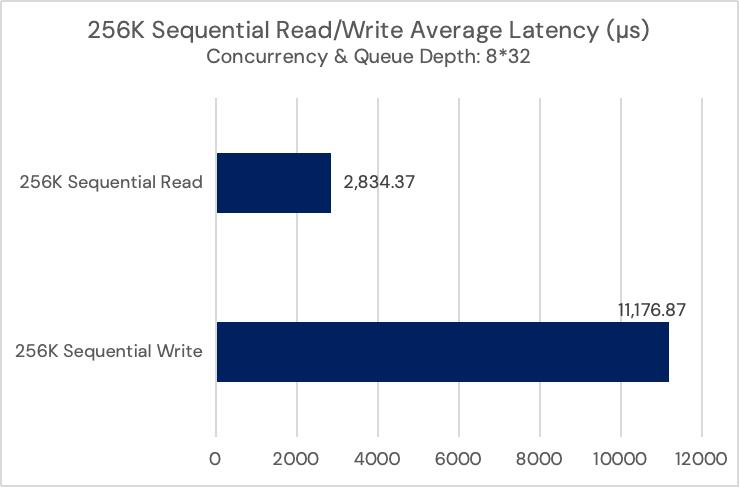
It can be observed that AECP 6.3 achieves sequential read bandwidth exceeding 135,000 MiB/s (~135 GiB/s) and sequential write bandwidth surpassing 34 GiB/s, enabling it to easily handle high-throughput workloads such as big data processing and AI training.
Learn more about upgraded features and capabilities of AECP 6.3 from our latest blogs:
What’s New in Arcfra Enterprise Cloud Platform 6.3
Arcfra AECP 6.3 Deep Dive | RDMA Cross-NIC HA for High-Performance Workload Reliabilit
Arcfra simplifies enterprise cloud infrastructure with a full-stack, software-defined platform built for the AI era. We deliver computing, storage, networking, security, Kubernetes, and more — all in one streamlined solution. Supporting VMs, containers, and AI workloads, Arcfra offers future-proof infrastructure trusted by enterprises across e-commerce, finance, and manufacturing. Arcfra is recognized by Gartner as a Representative Vendor in full-stack hyperconverged infrastructure. Learn more at www.arcfra.com.